Tracy Hauff was born in the southwestern corner of South Dakota on land belonging to the Lakota Sioux. Her family moved to the East River city of Sioux Falls when she was two-years-old, returning to the Black Hills area fourteen years later. She finished her final two years of high school in Rapid City before embarking upon a nomadic lifestyle that led her first to the Rocky Mountains in Colorado and then on to the temperate rainforest of the Pacific Northwest. The slimy slugs and gray skies of the damp north were exchanged for scorpions and sun-filled days in Texas where she resided briefly in the desolate tumbleweed-strewn terrain of the panhandle. Further south, San Antonio and Corpus Christi proved to be more suitable habitats as she developed a love for spicy Mexican cuisine and meditative strolls along the beaches of Padre Island. The sultry Mississippi River region beckoned her from the Lone Star state and she embraced Memphis as a temporary home until a visit to her sister in Wyoming turned into a six-year residency split between the Big Horn Mountains and the Snowy Range. Becoming annoyed with the unrelenting wind and short summers, she moved south once again, this time to the arid Sonora Desert. From there, she went back to the place she calls home base—The Black Hills. The following fifteen years were divided between the states of Arizona and South Dakota. Today, you will find her once again in the Colorado Rockies, but to say she has "come full-circle" would be premature. In seven states, she has resided in seventeen cities and "somewhere between seventy-five and eighty-five" houses. While the ebb and flow of life has certainly manipulated her travels, she also credits her wanderlust to Oglala Lakota DNA. Oglala means "to scatter one's own" and she has undoubtedly accomplished that.
Throughout her journey, Tracy has experienced love and loss; established valuable friendships while gladly escaping roguish acquaintances; acknowledged praise and accepted criticism; lived both a flamboyant and a modest lifestyle; grinned with pride at accomplishments and lost sleep over misdeeds. Her numerous encounters and escapades fuel her passion for writing.
Her novel, Chokecherry: The Wild Story of a Bitter Young Woman, recounts the confusion and struggles of Tallie, a child/woman who leaves home at age seventeen when she can no longer reconcile life's entanglements and disappointments. Tallie's young world is turned upside down; good sinks to the bottom while evil floats to the top like a grimy layer of toxic oil slowly suffocating the organisms trapped below.
“With age, we should develop the desire to move forward with an unencumbered conscience. It is never too late to correct human error or begin anew. A pleasant surprise in my life has been the discovery, and freedom, of forgiveness; the ability to forgive myself as well as others. Blame and reproach are crippling. Chokecherry is a story of anguish and redemption that should be read by everyone who, at one time or another in their life, may have felt the stinging prick of shame, stab of guilt, or aching throb of despair—all painful states of the human mind that should never be allowed to take root.
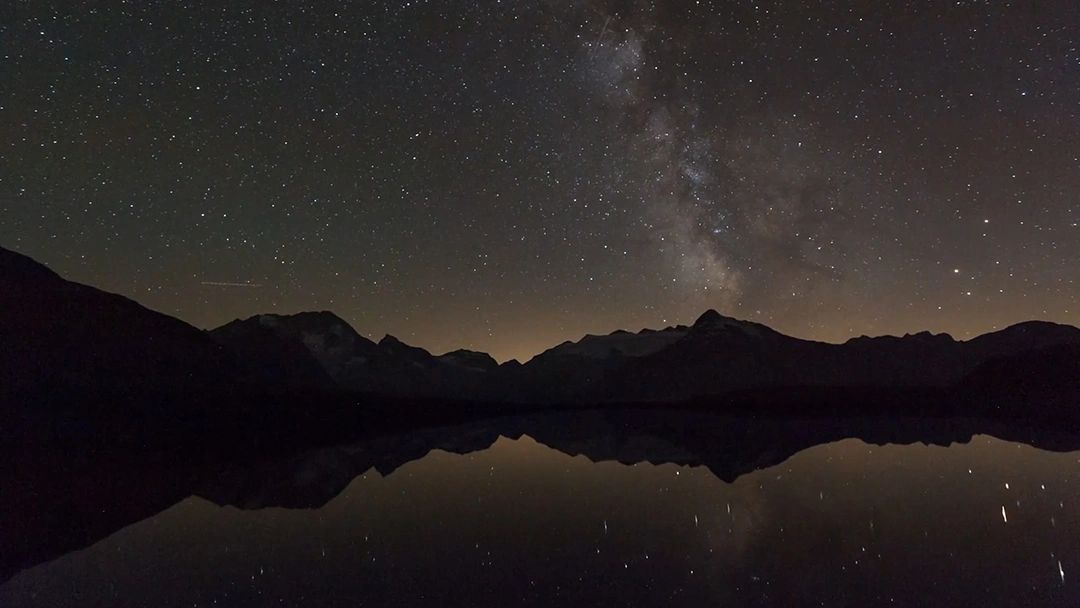
Our world is a massive ball of energy. How can your intake not be influenced by your output? If your focus on life is skewed toward the negative and you are surrounded by pessimists and cynics, their fatalistic energy will eventually consume you and rob you of happiness. Look for kindness in others and you will find yourself amidst good people. Beauty is abundant in our world and presented to us each and every day. All we need to do is open our door and step out to experience the wondrous welcome of a morning sunrise, glowing sunset to signal the end of our day, and stars twinkling overhead to guide us in the dark.
Believe that good will prevail and believe in you. Embrace the joy of life."
~Tracy~
My Love Affair with the Rainforest - Visit the Photo Gallery

Family, friends, and colleagues have often asked me what prompted my fascination with the rainforest. It began when I was a young girl and we received a copy of National Geographic each month in the mail. I would look at every issue, cover-to-cover, mesmerized by the vivid photography and fascinating stories about the people and wildlife inhabiting our planet, and as I studied the geographical diversity, my heart was captured by the rainforest. I could smell the orchids, feel the sticky humidity clinging to my skin, hear the thrumming of a million insects, and I never tired of looking at the lush green canopy towering majestically over it all.
My desire to visit the rainforest became reality in 2009 when I traveled to Lamanai, Belize. On the boat ride up New River into the jungle, my hair kinked up and bushed out to the size of a lion's mane. On day one, I wore a full face of makeup. Day two, only eyeliner and mascara. Day three, eyeliner. Days four, five, and six—nada. My skin was drenched with natural moisture that could make me a millionaire in the cosmetic industry if it could be bottled and sold.
My days and nights were filled with discovery and wonder. The brightly colored hibiscus, miniature orchids, bird of paradise, and plumeria were far more abundant, delivering a fragrance far sweeter, than what I had ever imagined. Howler monkeys performed like clockwork each morning and late afternoon, their throaty growls echoing for miles in the pristine air. Using only the silvery light provided from a full moon, I attempted spear fishing while balancing in a canoe, waking with sore muscles from stomach to ankles. The following night, I coaxed an apprehensive tarantula out of her den and upon venturing further into the jungle it was my turn to be leery as I peered under an umbrella palm at thick-bodied wasps sleeping together in a clutch outside their nest. The guide said they were Strangler Wasps and that their sting is greatly feared by the village people as the allergic reaction to their venom will close your throat and restricts breathing. In the early misty morning, I watched a Laughing Falcon swoop down from his perch high in a treetop and fly back up with his breakfast dangling from his talons. In an airboat, I held a baby crocodile—abruptly snatched from the lagoon—so the guide could determine his sex, length, and weight, and place a microchip in his tail. Climbing to the top of the High Temple in the Mayan ruins, I gazed upon the brilliant green blanket spread out below me, stretching for miles in every direction. Later in the day, in the shadowy cocoon of the jungle, I gripped a thick woody vine to swing with the monkeys, discovering that it's much more difficult than it looks. Day and night, I observed a busy brigade of thousands upon thousands of leafcutter ants as they marched down a tree trunk and onto their two-foot-wide personal highway, vanishing into the jungle with their precious cargo perched high upon their backs. At my request, a guide took me to their nest—an enormous mound that measured twenty-feet wide by three-foot high.
My daily meals consisted of fresh fish caught from the lagoon, accompanied by fruits that had been plucked that day from the jungle. I ate Snook, Snapper, Grouper, mangoes, pineapples, papayas, and bananas in an open-air hut constructed of sturdy mahogany and massive palm leaves. Fresh eggs were served for breakfast, lunch, and dinner; compliments of the colorful hens that roamed freely in the nearby village.
One morning, walking the path that lead to the Indian village, I encountered a twelve-year-old boy who was willing to chat for a few minutes. I never took my eyes off of him as he nonchalantly swung a huge machete from side-to-side, its broad blade glimmering in the sun's rays. He informed me that he was too old to go to school and was on his way to gather bananas. Declining to have his picture taken, he accompanied me through the village, proudly pointing out their library—a small structure no larger than my bedroom.
The rainforest is an explosion of life. Unfettered by signs, barricades, or fences, it displays its exotic beauty with a wildly alluring abandonment. The air is pure, the flora incomparable, the sky a cloudless clear blue, and the climate a delightful tropical temperature. The natives are still unspoiled by materialism and technology; they know it exists, but it is not important in their uncomplicated lives. As the lungs, heart and soul of our planet, the rainforest is an innocent child that should be loved and must be protected. I cannot wait to return.
